
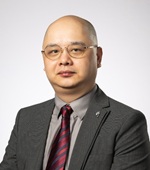
Prof. Haoran Xie, Lingnan University, Hong Kong
Prof. Haoran Xie is the Professor and the Person-in-Charge (Head) of Division of Artificial Intelligence, the Associate Dean of School of Data Science, and the Director of LEO Dr. David P. Chan Institute of Data Science at Lingnan University, Hong Kong. He has published over 488 research papers, including 289 journal articles. He also serves as Editor-in-Chief of Computers & Education: Artificial Intelligence, Computers & Education: X Reality, Natural Language Processing Journal, and Artificial Intelligence in Language Education. His research interests include natural language processing, large language models, and AI in education. According to Google Scholar, he has over 31,713 citations, an h-index of 69, and an i10-index of 256. Since 2021, he has been recognized among the World’s Top 2% Scientists by Stanford University.
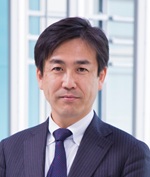
Prof. Shin’ichi Warisawa, The University of Tokyo, Japan
Shin‘ichi Warisawa is a professor in the Department of Human and Environmental Studies at the Graduate School of Frontier Sciences, The University of Tokyo. After earning a Bachelor of Engineering in Mechanical Engineering from The University of Tokyo in 1989, he received a Master of Engineering from the same university in 1991 and a Doctor of Engineering in 1994. He began his career in 1994 as a research assistant at the Institute of Precision Engineering at the Tokyo Institute of Technology, where he remained until 2000. He then returned to the University of Tokyo, serving as a lecturer in the Department of Mechanical Engineering (2000–2003) and as an lecturer/associate professor (2003–2012), before becoming an associate professor at the Graduate School of Frontier Sciences (2012–2015). Additionally, from 2010 to 2011, he conducted research as a visiting researcher at the Massachusetts Institute of Technology (MIT) Electrical Engineering Laboratory. His research background spans precision engineering, medical robotics, and nano- and micro-machines (NEMS), and he has previously worked on projects such as tele-surgical robotic systems and nanofabrication for nanomechanical resonators. Building on this solid expertise in advanced sensing and mechanical systems, his current research explores the intersection of engineering and human well-being. His specific research interests include stress monitoring, emotion monitoring, human behaviour monitoring, and blood pressure monitoring. By deeply analyzing these physiological and behavioural indicators, his laboratory aims to optimize human-environment interactions and actively applies these engineering methods to the development of innovative educational technologies and adaptive learning environments.
More speakers will be announced soon......